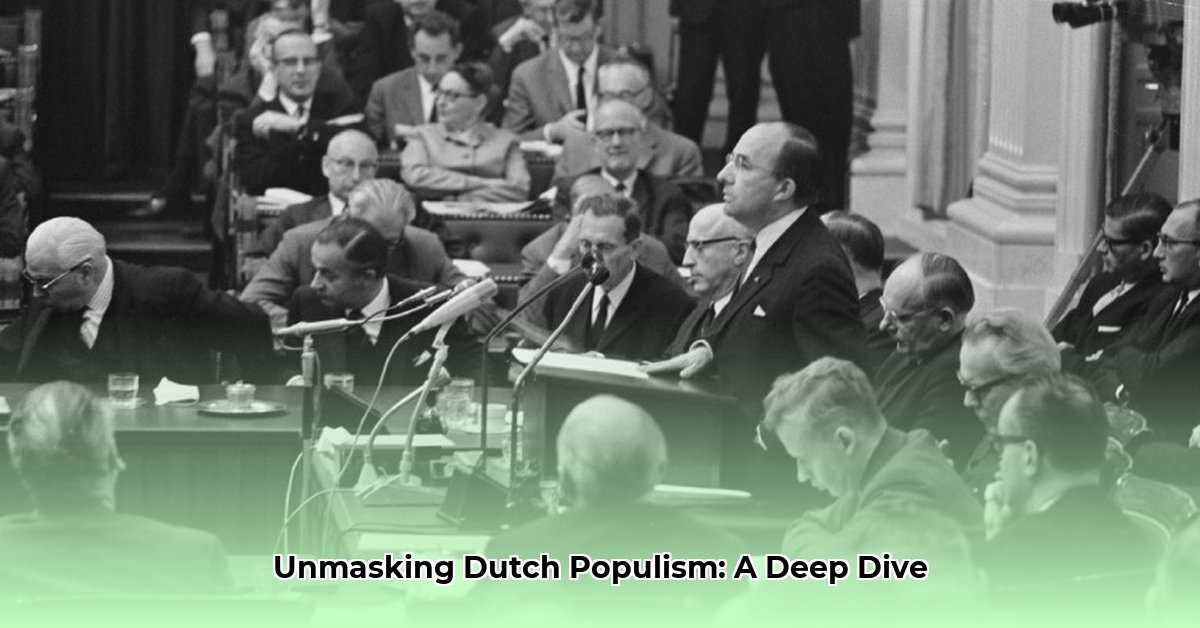
The rise of populism in the Netherlands has reshaped the political landscape, leaving many asking: Wat is populisme, eintlik? (What is populism, really?). This in-depth look unpacks the meaning and impact of populism in Dutch politics, exploring its historical roots, key players, and potential future trajectories. We'll examine how anxieties around immigration, economic uncertainty, and a perceived disconnect between the elite and the ordinary citizen have fuelled its growth. Remember, understanding populism is crucial for navigating the complexities of modern Dutch politics.
The Emergence of Populism in the Netherlands
Before the arrival of figures like Pim Fortuyn, populism wasn't a major force in Dutch politics. However, the weakening of traditional social structures – a process often referred to as "de-pillarization"—created a void that populist narratives swiftly filled. This de-pillarization, the decline of the traditional four-pillar system (Catholic, Protestant, Socialist, and Liberal), left many feeling adrift and disconnected from established political parties. This sense of disenfranchisement provided fertile ground for populist appeals. Fortuyn's rise demonstrated a deep-seated dissatisfaction with the established order, a feeling that "something wasn't quite right."
Analysing Dutch Populism: A Multifaceted Phenomenon
Populism in the Netherlands isn't a monolithic entity; it’s far more nuanced than a simple left-wing versus right-wing dichotomy. It's a complex interplay of factors, ranging from economic anxieties to concerns about immigration and social change. Populist leaders often present themselves as the sole defenders of "the people," contrasting themselves against a supposedly corrupt elite. This simple "us versus them" narrative resonates deeply with many citizens who feel unheard or overlooked by mainstream politics.
Is this a sustainable trend, or a temporary blip on the radar? This is a question that continues to challenge political analysts. The success of parties like the PVV (Party for Freedom) and the FvD (Forum for Democracy) highlights the power of populist messaging, but also reveals the internal divisions within the populist movement itself. Different populist factions sometimes hold conflicting views on issues like foreign policy, demonstrating the heterogeneous nature of Dutch populism.
The Impact and Consequences: A Shifting Political Landscape
Populism's impact on Dutch politics is undeniable. Elections have become more volatile, and political discourse is often sharper and more divisive. Professor Dr. Annemarie Kester, a leading political scientist at Leiden University states: "The rise of populism has significantly eroded trust in established institutions, leading to political instability and hindering the ability to address pressing societal issues." This erosion of trust poses a long-term threat to democratic norms and values.
The Risk Assessment
The consequences of populist influence are multi-layered:
- Weakening of Democratic Institutions: Constant attacks on established institutions can undermine their legitimacy and effectiveness.
- Spread of Misinformation: Populist narratives often rely on simplified or inaccurate information, hindering informed public discourse.
- Increased Social Division: The "us versus them" rhetoric exacerbates existing societal divisions and fosters conflict.
The Future of Populism: Navigating the Uncertainties
Predicting the future of populism is challenging, but understanding its dynamics is crucial. Continuing to simply analyse populisme betekenis (the meaning of populism) is not sufficient. We need strategic action.
Short-Term Strategies: These focus on mitigating immediate risks, such as tackling the spread of misinformation and encouraging greater political participation. Strengthening media literacy and fact-checking initiatives are paramount.
Long-Term Strategies: These address the deeper systemic issues that fuel populism. This requires a focus on improving transparency in government, addressing economic inequality, and fostering a sense of inclusivity within society. It means building bridges, engaging in constructive dialogue, and promoting civic participation.
A Collaborative Effort: Charting a Course Forward
Combating populism requires a unified approach:
- Political Scientists: Continue in-depth research to better understand the dynamics of populism and inform effective counter-strategies.
- Political Parties: Engage directly with the concerns of voters, addressing their anxieties and promoting open communication.
- Media Outlets: Uphold journalistic integrity, combatting misinformation through fact-checking and promoting media literacy.
- Civil Society Groups: Foster inclusive dialogue, promoting engagement and bridging societal divides.
- Government: Strengthen democratic institutions, ensuring transparency and accountability.
Understanding Populisme Betekenis in the Netherlands isn't just an academic exercise; it's a vital step in safeguarding the health of Dutch democracy. It's about ensuring a future where all voices are heard, and where informed debate guides policy-making.